Buy diceslot.be ?
We are moving the project
diceslot.be .
Are you interested in purchasing the domain
diceslot.be ?
domain@kv-gmbh.de · 0541-91531010
Buy diceslot.be ?
Are photons electrons?
No, photons are not electrons. Photons are elementary particles that make up light and electromagnetic radiation, while electrons are negatively charged subatomic particles that are part of atoms. Photons have no mass and travel at the speed of light, while electrons have mass and are bound to the nucleus of an atom. **
How are photons created?
Photons are created through a process called electromagnetic radiation. This occurs when an atom absorbs energy, causing its electrons to move to a higher energy level. When the electrons return to their original energy level, they release the absorbed energy in the form of photons. This process can happen in various ways, such as through thermal radiation, chemical reactions, or nuclear reactions. **


Similar search terms for Photons
Top-Angebote
Products related to Photons:
-
Secret Play Jeux de deux dés foreplay fanatics ! Dice lovers !Lancez les dés et laissez la curiosité guider vos gestes. C’est simple, ludique et terriblement excitant. Avec Jeux de deux dés foreplay fanatics ! Dice lovers ! de Secret Play, chaque lancer devient une promesse de découverte complice. Le plaisir se cache dans l’imprévisible, et ces petits cubes4,99 €*Shipping: 3,90 €Secure redirect to the provider
-
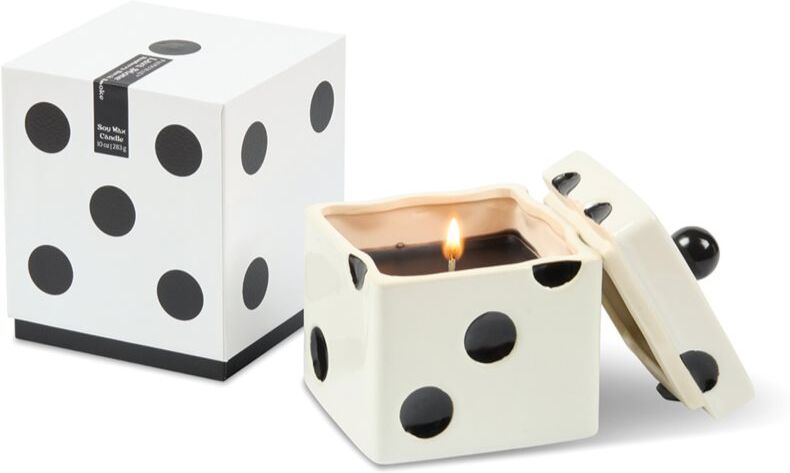
Paddywax Lucky Dice Misted Lime bougie parfumée en céramique 283 gPaddywax Lucky Dice Misted Lime, 283 g, Bougies parfumées Parfum d'ambiance, Une maison où règne un parfum agréable est un endroit où chacun se sent bien. Cette bougie parfumée Paddywax Lucky Dice Misted Lime allie la lumière chaleureuse de la flamme à un parfum envoûtant qui envahit peu à peu toute la pièce. Chaque fois que vous l’allumez, elle transforme les moments du quotidien en un rituel de bien-être et de détente. Le produit : le pot peut également faire office d’accessoire élégant une fois que la bougie est complètement consumée emballage design Constitue le cadeau idéal sa flamme diffuse une agréable lumière douce combustion pure crée une atmosphère harmonieuse procure une sensation de quiétude et de bien-être met en valeur le caractère chaleureux de l’intérieur diffuse un parfum agréable dans la pièce sublime les moments passés à la maison au quotidien Composition du produit : mèche de coton mèche sans plomb constitué à 100 % de cire de soja Mode d’emploi : Suivez les instructions du manuel joint. Laissez la bougie brûler jusqu’à ce que la couche supérieure soit entièrement fondue afin d’éviter la formation d’un creux dans la cire. Pour une combustion optimale, il est conseillé de couper régulièrement la mèche à la longueur recommandée.32,00 €*Shipping: 3,45 €Secure redirect to the provider
-
Paddywax Lucky Dice Tobacco Patchouli bougie parfumée en céramique 283 gPaddywax Lucky Dice Tobacco Patchouli, 283 g, Bougies parfumées Parfum d'ambiance, Ce sont ces petits détails qui créent une atmosphère des plus agréables. Cette bougie parfumée Paddywax Lucky Dice Tobacco Patchouli embaume la pièce d’un agréable parfum et transforme chaque instant en un moment de bien-être. Il suffit de l’allumer et de profiter d’un moment de calme. Le produit : parfum chaleureux le pot peut également faire office d’accessoire élégant une fois que la bougie est complètement consumée emballage design Constitue le cadeau idéal sa flamme diffuse une agréable lumière douce combustion pure crée une atmosphère harmonieuse procure une sensation de quiétude et de bien-être met en valeur le caractère chaleureux de l’intérieur diffuse un parfum agréable dans la pièce sublime les moments passés à la maison au quotidien Composition du produit : mèche de coton mèche sans plomb constitué à 100 % de cire de soja Mode d’emploi : Suivez les instructions du manuel joint. Laissez la bougie brûler jusqu’à ce que la couche supérieure soit entièrement fondue afin d’éviter la formation d’un creux dans la cire. Pour une combustion optimale, il est conseillé de couper régulièrement la mèche à la longueur recommandée.32,00 €*Shipping: 3,45 €Secure redirect to the provider



-
What happens to photons?
Photons are elementary particles that make up light. They do not have mass and travel at the speed of light. When photons interact with matter, they can be absorbed, reflected, or transmitted. Absorption of photons can result in the excitation of electrons, leading to various physical and chemical processes. **
-
How can one convert the energy of different photons into monochromatic photons?
One way to convert the energy of different photons into monochromatic photons is through a process called frequency doubling or second harmonic generation. This involves passing the photons through a nonlinear crystal, which causes the photons to combine and create new photons with double the frequency and half the wavelength of the original photons. This results in monochromatic photons with a single, specific wavelength. Another method is through the use of filters or monochromators, which can selectively filter out photons of specific wavelengths, allowing only monochromatic photons to pass through. **
-
How far do photons travel?
Photons, as particles of light, travel at the speed of light in a vacuum, which is approximately 299,792 kilometers per second. This means that photons can travel vast distances in a very short amount of time. However, their travel distance can be affected by factors such as absorption, reflection, and scattering, which can cause them to be absorbed or redirected before reaching their destination. **
-
How can photons have mass?
Photons are massless particles according to the Standard Model of particle physics. They travel at the speed of light and have zero rest mass. However, in certain theoretical models beyond the Standard Model, such as some versions of string theory, it is possible for photons to acquire a small amount of mass through interactions with other particles or fields. This mass is typically very small and has not been experimentally observed. **
What distinguishes photons and protons?
Photons are elementary particles that carry electromagnetic radiation, such as light, while protons are subatomic particles found in the nucleus of an atom. Photons have no mass and travel at the speed of light, while protons have mass and are composed of quarks. Additionally, photons do not have an electric charge, while protons have a positive electric charge. **
Why can photons penetrate matter?
Photons can penetrate matter because they do not have an electric charge and are not affected by electromagnetic forces within the material. Additionally, photons do not have mass, allowing them to travel at the speed of light and pass through matter without being absorbed or deflected. This property of photons enables them to interact with atoms and molecules in the material, leading to phenomena such as absorption, reflection, and transmission. **
Top-Angebote
Products related to Photons:
-
The House Of Oud Gambling Eau de Parfum mixte 75 mlThe House Of Oud Gambling, 75 ml, Eaux de Parfum mixte, Laissez-vous imprégner d’un parfum qui vous mettra de bonne humeur tout au long de la journée. L’eau de parfum mixte The House Of Oud Gambling reflète l’optimisme et le bonheur à l’état pur. parfum aromatique aux notes d’herbes parfum boisé pour les personnes au style peu conventionnel un parfum unique qui se prête aux occasions spéciales parfum mixte148,20 €*Shipping: 3,45 €Secure redirect to the provider
-
Bijoux Indiscrets Jeu de dés sensuel lucky love diceLancez les dés et laissez le hasard guider vos envies. Simple, ludique, excitant. Le Jeu de dés sensuel lucky love dice de Bijoux Indiscrets transforme chaque moment à deux en terrain d’exploration complice. Trois petits cubes, une infinité de combinaisons pour réveiller la curiosité et la7,95 €*Shipping: 3,90 €Secure redirect to the provider
-
Secret Play Jeux de deux dés foreplay fanatics ! Dice lovers !Lancez les dés et laissez la curiosité guider vos gestes. C’est simple, ludique et terriblement excitant. Avec Jeux de deux dés foreplay fanatics ! Dice lovers ! de Secret Play, chaque lancer devient une promesse de découverte complice. Le plaisir se cache dans l’imprévisible, et ces petits cubes4,99 €*Shipping: 3,90 €Secure redirect to the provider
-
Are photons electrons?
No, photons are not electrons. Photons are elementary particles that make up light and electromagnetic radiation, while electrons are negatively charged subatomic particles that are part of atoms. Photons have no mass and travel at the speed of light, while electrons have mass and are bound to the nucleus of an atom. **
-
How are photons created?
Photons are created through a process called electromagnetic radiation. This occurs when an atom absorbs energy, causing its electrons to move to a higher energy level. When the electrons return to their original energy level, they release the absorbed energy in the form of photons. This process can happen in various ways, such as through thermal radiation, chemical reactions, or nuclear reactions. **
-
What happens to photons?
Photons are elementary particles that make up light. They do not have mass and travel at the speed of light. When photons interact with matter, they can be absorbed, reflected, or transmitted. Absorption of photons can result in the excitation of electrons, leading to various physical and chemical processes. **
-
How can one convert the energy of different photons into monochromatic photons?
One way to convert the energy of different photons into monochromatic photons is through a process called frequency doubling or second harmonic generation. This involves passing the photons through a nonlinear crystal, which causes the photons to combine and create new photons with double the frequency and half the wavelength of the original photons. This results in monochromatic photons with a single, specific wavelength. Another method is through the use of filters or monochromators, which can selectively filter out photons of specific wavelengths, allowing only monochromatic photons to pass through. **
Similar search terms for Photons
-
Paddywax Lucky Dice Misted Lime bougie parfumée en céramique 283 gPaddywax Lucky Dice Misted Lime, 283 g, Bougies parfumées Parfum d'ambiance, Une maison où règne un parfum agréable est un endroit où chacun se sent bien. Cette bougie parfumée Paddywax Lucky Dice Misted Lime allie la lumière chaleureuse de la flamme à un parfum envoûtant qui envahit peu à peu toute la pièce. Chaque fois que vous l’allumez, elle transforme les moments du quotidien en un rituel de bien-être et de détente. Le produit : le pot peut également faire office d’accessoire élégant une fois que la bougie est complètement consumée emballage design Constitue le cadeau idéal sa flamme diffuse une agréable lumière douce combustion pure crée une atmosphère harmonieuse procure une sensation de quiétude et de bien-être met en valeur le caractère chaleureux de l’intérieur diffuse un parfum agréable dans la pièce sublime les moments passés à la maison au quotidien Composition du produit : mèche de coton mèche sans plomb constitué à 100 % de cire de soja Mode d’emploi : Suivez les instructions du manuel joint. Laissez la bougie brûler jusqu’à ce que la couche supérieure soit entièrement fondue afin d’éviter la formation d’un creux dans la cire. Pour une combustion optimale, il est conseillé de couper régulièrement la mèche à la longueur recommandée.32,00 €*Shipping: 3,45 €Secure redirect to the provider
-
Paddywax Lucky Dice Tobacco Patchouli bougie parfumée en céramique 283 gPaddywax Lucky Dice Tobacco Patchouli, 283 g, Bougies parfumées Parfum d'ambiance, Ce sont ces petits détails qui créent une atmosphère des plus agréables. Cette bougie parfumée Paddywax Lucky Dice Tobacco Patchouli embaume la pièce d’un agréable parfum et transforme chaque instant en un moment de bien-être. Il suffit de l’allumer et de profiter d’un moment de calme. Le produit : parfum chaleureux le pot peut également faire office d’accessoire élégant une fois que la bougie est complètement consumée emballage design Constitue le cadeau idéal sa flamme diffuse une agréable lumière douce combustion pure crée une atmosphère harmonieuse procure une sensation de quiétude et de bien-être met en valeur le caractère chaleureux de l’intérieur diffuse un parfum agréable dans la pièce sublime les moments passés à la maison au quotidien Composition du produit : mèche de coton mèche sans plomb constitué à 100 % de cire de soja Mode d’emploi : Suivez les instructions du manuel joint. Laissez la bougie brûler jusqu’à ce que la couche supérieure soit entièrement fondue afin d’éviter la formation d’un creux dans la cire. Pour une combustion optimale, il est conseillé de couper régulièrement la mèche à la longueur recommandée.32,00 €*Shipping: 3,45 €Secure redirect to the provider
-
How far do photons travel?
Photons, as particles of light, travel at the speed of light in a vacuum, which is approximately 299,792 kilometers per second. This means that photons can travel vast distances in a very short amount of time. However, their travel distance can be affected by factors such as absorption, reflection, and scattering, which can cause them to be absorbed or redirected before reaching their destination. **
-
How can photons have mass?
Photons are massless particles according to the Standard Model of particle physics. They travel at the speed of light and have zero rest mass. However, in certain theoretical models beyond the Standard Model, such as some versions of string theory, it is possible for photons to acquire a small amount of mass through interactions with other particles or fields. This mass is typically very small and has not been experimentally observed. **
-
What distinguishes photons and protons?
Photons are elementary particles that carry electromagnetic radiation, such as light, while protons are subatomic particles found in the nucleus of an atom. Photons have no mass and travel at the speed of light, while protons have mass and are composed of quarks. Additionally, photons do not have an electric charge, while protons have a positive electric charge. **
-
Why can photons penetrate matter?
Photons can penetrate matter because they do not have an electric charge and are not affected by electromagnetic forces within the material. Additionally, photons do not have mass, allowing them to travel at the speed of light and pass through matter without being absorbed or deflected. This property of photons enables them to interact with atoms and molecules in the material, leading to phenomena such as absorption, reflection, and transmission. **
* All prices are inclusive of VAT and, if applicable, plus shipping costs. The offer information is based on the details provided by the respective shop and is updated through automated processes. Real-time updates do not occur, so deviations can occur in individual cases. ** Note: Parts of this content were created by AI.